


PT010
// key words
ai
wearable tech
surveillance device
encrypted logging
biomimetics
‘madonna’ headset
telecommunication device
cyber-physical device
mechatronics
personal robotics
sound
// premise
By this point, the creative alias 0d had been born, and everything that followed would be built in correlation with the values and principles behind it. 0d isn't just a brand, it's the representation of an idea, an umbrella for an ongoing family of research and development, some of which surfaces here, and some of which, for now, stays unseen.
The seed for this project came from something small and specific, watching careless behavior play out in shared public space and feeling the familiar frustration that comes with it. Rather than stay upset, blame, or wait for someone else to fix it, I decided it was on me to do something. You can't change anyone else, only yourself, and that shift in thinking is ultimately what led me to the graduate program which focused on innovation and design engineering.
I already understood the scale of the problems out there, there's no shortage of them. What they called for was a genuinely different way of thinking, and my own path has given me a lens that tends to diverge from the people immediately around me. If I could put that lens toward something I actually love, I believed the results would benefit more than just myself. Increasingly, very little of what I do is framed around "I", it's oriented toward what serves the wider world.
PT010 came out of a close collaboration with a fellow engineer (a^s), working as lead designer and conceptualizer myself while my collaborator led the engineering side. Together we developed the concept for a logging device built to help users self-reflect through their own recorded data. The creative chemistry between us was immediate, and it carried the project through to the end.
// research


// performance
The upper third layer in IDF combat gear is the tactical vest, worn above the uniform and kevlar vest. That layering raised a natural question, how might a similar logic apply to a smart vest built for combat operations. PT010 drew inspiration from the IDF's "Madonna" headset and radio system, adapting that same hands-free, mission-ready logic into a wearable built for reflection rather than combat.
// biomimetics
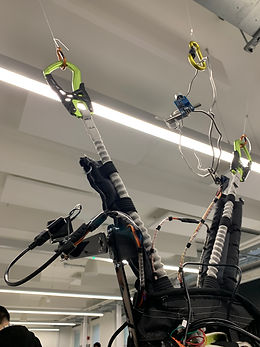
Insect anatomy became an unexpected reference point, and mechatronic elements were engineered into the PT010 form to echo it. The two head sensors were designed to resemble antennae, both visually and functionally, governing the device's movement and response to the operator's commands.
// ai
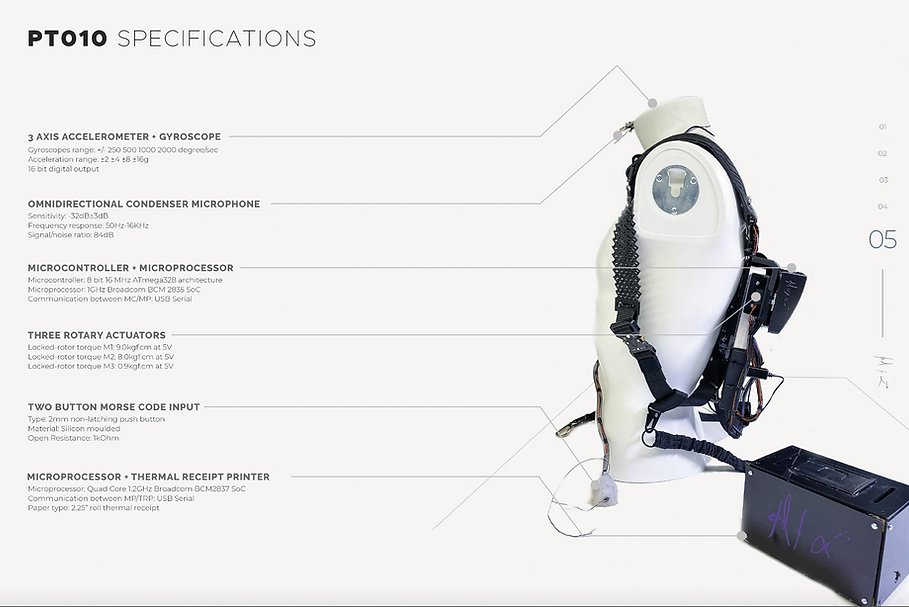
Our research pointed to speech and writing as the most effective methods of reflection, so PT010 was built around voice command, using existing speech recognition infrastructure to enable hands-free logging. The device was also capable of writing encrypted logs in Morse code, adding a layer of privacy to the reflections it captured. My collaborator engineered a personality layer into the device itself, shaping its responses to mirror the individual wearer's own personality back to them.
// mental health
Mental health. Research on expressive writing has long shown that putting difficult thoughts into words, spoken or written, reduces rumination and helps regulate emotion more than simply thinking them over. Psychologist James Pennebaker's foundational studies found that this kind of structured articulation improved both psychological and physical markers of stress over time. The format matters less than the act itself, journaling, speaking aloud, or internal dialogue all externalize thought so it can be examined rather than just felt. That question shaped PT010, if articulation itself is the mechanism, what would a device look like that made it easier to sustain and revisit.

// process


// wearables
Both my collaborator and I had, somewhat ironically, been independently drawn to mental health as a design problem during an earlier module, each spending considerable time researching it before we ever partnered. He brought deep skill in electronics engineering, I was developing a human-centered design approach shaped by my own life experience. We had a lot to learn from each other and were eager to close that gap. We started by exploring wrist-worn possibilities, motivated by the earlier id0d bands, but the brief called for a mechatronic component, which sent us back to the drawing board. That constraint led us toward biomimetics, and from there, toward the idea of a retractable, arm-like mechanism. Looking back at the early sketches, the throughline to the 0d brand is clear, I'd already built an exoskin with ex0d, now it was time for an exoskeleton.
// prototyping
The first prototype was built from a durable, water-resistant canvas fabric paired with a mountain-climbing harness for structure. With ex0d, I'd relied on a professional for assembly, this time, I took that responsibility on myself, applying what I'd learned. Development moved through fast, iterative cycles, sketch, build, test, adjust, repeating that loop until the mechanics behaved the way we needed
them to.


// PT001
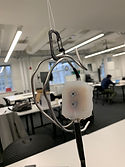
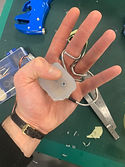
First prototype. A small array of motors, coordinated through an onboard controller, drove motion above the wearer's shoulder. A separate onboard system managed a camera and motion tracking, allowing the device to respond to the wearer's head movement in real time. Echoing the handheld piece from earlier military-inspired research, PT010 included a small handheld controller, initially built to trigger the arm and camera. Once voice recognition was integrated into the final build, that same controller was repurposed to support an encrypted logging function instead. My introduction to microcontroller and microprocessing technology.

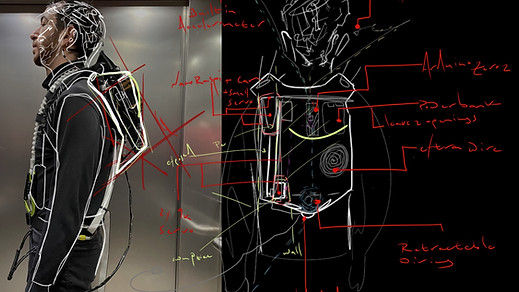

PT001 was a success during the intermittent exams. All that was left for us to do was fine tune. We met during break and devised a plan of attack to design an entirely new reiterated version - we wanted a final product for the final exams. We spent countless hours of coding, sketching, and rendering and against all odds, we came up with a design suitable for our needs.


// refinement
Where the first version had been sewn from heavy-duty fabric, the next iteration moved to a laser-cut base built in three pieces, with the outer shell fully 3D printed in a carbon-fiber composite filament. The robotic arms were machined from thin aluminum, the upper strap built from repurposed bicycle tire rubber, and the lower strap from a 3D-printed chainmail-style fabric. The goal throughout was consistent, stealthy, lightweight, and fully wireless.
sound


The base was laser cut - black acrylic sheet [5mm]
The 'smartpack' was designed using 3d software. The files were exported to support 3d printing. We included a wireless thermal printer to communicate the logs with the device.

recycled bicycle tire - shoulder straps

3d printed chainmail fabric
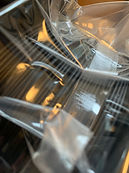
carbon fiber PLA filament - shell

thermal paper -printed logs


high grade metals and fabrics
3d printed parts and extruded branding
aluminum parts for robotic function
// outcome




// PT010
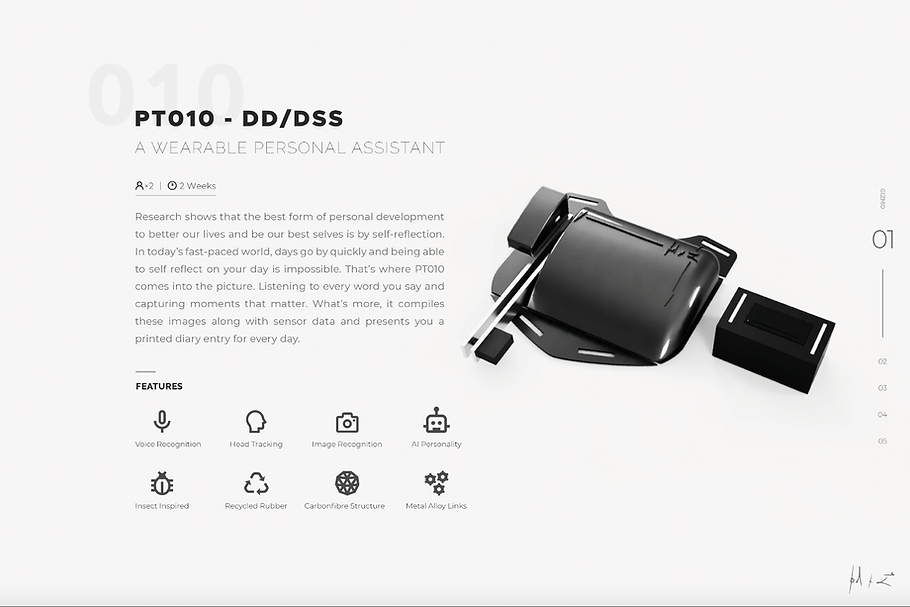
The result was a highly intuitive, responsive wearable built for reflection rather than surveillance in the traditional sense, though it borrowed conceptually from that language. The device responded to a small set of voice commands, and also had the ability to recognize context on its own, without requiring the wearer to prompt it directly. It communicated wirelessly with a companion printer that produced a physical daily log, giving the wearer something tangible to reflect on at the end of each day. The form stayed deliberately sleek and lightweight, function driving form rather than the other way around. Getting to this stage of the prototype, given the time we had, felt like a real achievement, and the creative partnership behind it proved just as strong as the device itself. Together, we landed on something with genuine range, a concept suitable for both military and civilian application.
// recognition
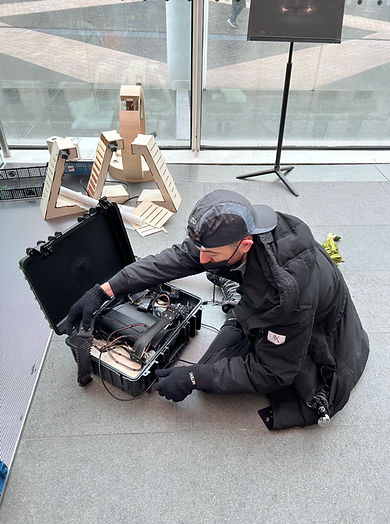
The project was selected as one of ten, out of forty submissions, to premiere at Imperial College London's Work in Progress exhibition in 2022.


sound
sound
sound
// reception
The response from critics reinforced what we felt building it. One instructor noted how clearly the collaboration showed in the final piece, two sets of experience and knowledge unified into a single object, and singled out the craftsmanship, the way every component was placed with intention and the material choices carried real thought behind them. The accompanying video was held to the same standard, demonstrating the device in action with a bit of dramatic flair. A guest critic admitted the purpose wasn't immediately obvious at first, but said it clicked by the end of the presentation, once the daily printout appeared and the concept resolved. They noted a dystopian undertone they appreciated, and pointed to the collaborative chemistry between us as something worth carrying into future work.
// evaluation


PT010 was a landmark of success for Adhesh and I, and it gave birth to a new and intelligent relationship for us as innovators seeking change for the world through design and engineering.
// smartwear
Measured against our original goal, daily logging and personal reflection, PT010 delivered. But its longer-term potential points somewhere further, toward smart tactical wear built for real operational use, combat or paramilitary contexts where the same sensing and logging logic could serve a very different purpose. It also opens a door toward wearables designed for space operations, environments where the margin for error is even thinner and the need for continuous, intelligent monitoring is even greater. How many sensors can a body reasonably carry? What should each one be listening for? And once that data exists, who does it serve, and how should it
be used?


sound
sound
// tajectory
PT010 marked an early, tangible answer to a question that's run through most of what followed, how do you design technology that lives on the body without asking the body to compromise for it. The same instinct that shaped the retractable arm and the encrypted logging system later resurfaced in different form, across wearable identity systems, protective design, and human-centered interfaces built for high-stakes environments. What started as a self-reflection tool became, in hindsight, an early prototype for a much larger question I'm still working through, how people and the systems they wear can move together, sense together, and adapt together, whether the context is personal, operational, or somewhere in between.