


// premise
That same cold New Year's Eve in Jerusalem, the night that gave rise to ex0d, held a second realization. Walking into a crowded venue with nowhere to secure my coat, I felt exposed in a small but telling way, suddenly aware of how vulnerable our everyday possessions actually are. ex0d had already built in some sense of security, but only as much as I could engineer at the time, within real constraints on skill and resources. I knew I needed to grow into the technical side of the work. Collaborating on PT010 became that bridge, my first real immersion in the electrical and robotic side of building.
bi0d became the project where I applied that growth on my own. As a solo effort, it was a chance to conceptualize and deliver something entirely outside my comfort zone, my first real attempt at complex engineering, start to finish.
The thread led back to that same night in Jerusalem. I already knew I wanted to bring biometric technology into the 0d family of products, and I envisioned all of them eventually operating in sync, communicating across a shared network the way a unified device ecosystem might. Building that kind of network responsibly meant it would need serious security at its core, which pulled me toward decentralized systems and the question of how biometric data could be protected through decentralization rather than a single point of control.
bi0d
// key words
decentralised technologies
biometric authentication
IoT
cybersecurity
cybercrime
digital wallet
web03
databending
minted encryption
// research
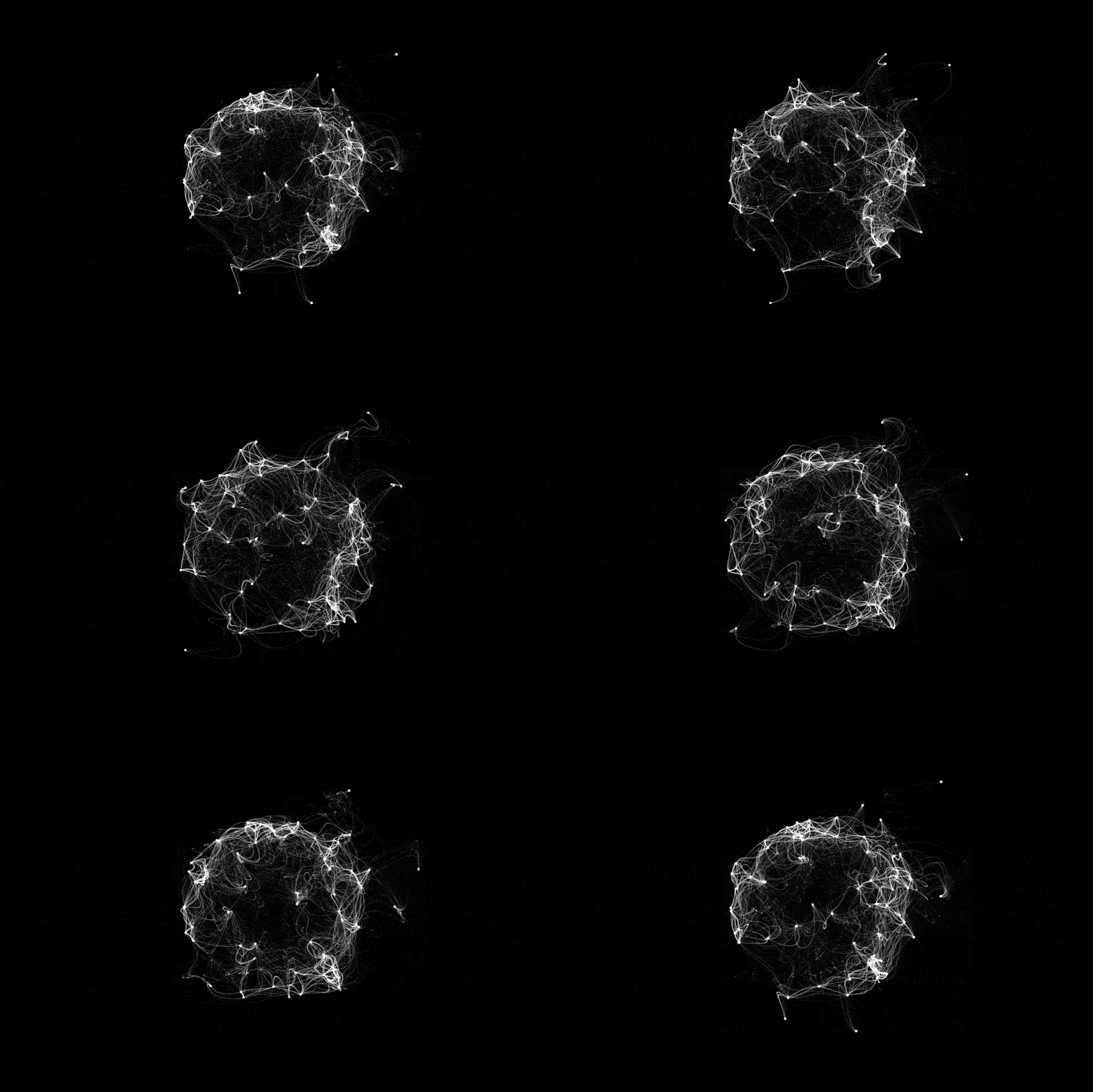



// population: Global population is projected to grow from 7.8 billion in 2020 to 9.9 billion by 2050, an increase of more than 25% in three decades. That trajectory reinforced a question already running through the 0d body of work, how do systems, physical or digital, scale to meet a world with that many more people in it, and what pressure does that put on the systems we use to manage identity, access, and trust.
// IoT: The number of connected devices, and the networks and data they generate, is expanding at a pace that outstrips most existing security models. As more of daily life runs through connected devices, the attack surface for identity theft, data exposure, and unauthorized access grows with it, making security less of a feature and more of a foundational requirement.
// decentralisation:
Distributed ledger systems offer a promising alternative to centralized authentication for connected devices, removing the single point of failure that centralized identity systems typically rely on. Rather than trusting one authority to verify who someone is, a decentralized model spreads that trust across a network.
// cyber-physical security:
As connected devices and digitized services multiply, traditional identity management struggles to keep pace, creating gaps between how identity is verified digitally and how it's protected physically. This tension, between convenience and control, became a core design question for bi0d.
// blockchain: Blockchain technology functions as a core mechanism for maintaining a distributed, public ledger, recording and verifying transactions or credentials without relying on a central authority to hold or control that record.
// biometric Authentication System: A decentralized, distributed approach to processing biometric data offers a more auditable, transparent way of handling something as sensitive as a person's biological identifiers, in contrast to storing that data in a single, centralized database vulnerable to breach.
// ownership economy: An emerging model of software design treats users not just as operators of a platform but as partial owners of it, shifting the relationship from one of extraction to one of shared stake and shared responsibility.
// self Sovereign Identity: describes a model of identity management where individuals fully own and control their own digital identity, rather than depending on a centralized or federated system where a platform or organization issues and controls that identity on the user's behalf. Traditional identity systems require users to place their trust in the organizations managing them. Self-sovereign models aim to remove that dependency altogether, using distributed ledger technology and verifiable credentials to let individuals hold and present their own identity without needing an intermediary to vouch for them.
// process


// organisation
This was newer territory for me, so I leaned on organizational instinct, consulting with people more experienced in the space about the materials and procedures needed to build a blockchain-based biometric device. Once I had a clear list of requirements, I sourced the necessary parts.
// retro[fitting]
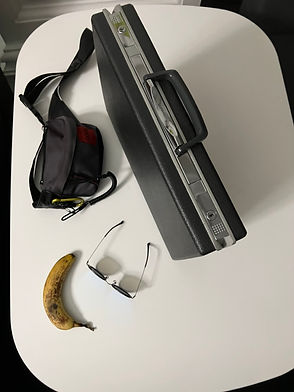
I brought a vintage briefcase with me to London, another secondhand find in excellent condition, much like the palmcorder that started frequency0d. I was drawn to its lock-and-key mechanism and its retro character, and I knew early on I wanted to eventually replace that manual lock with fingerprint authentication. This solo project gave me the room to pursue that idea fully, using the resources available to keep building toward the broader 0d vision. It also let me return to something I'd explored in frequency0d, the hybridization of old and new technology, and the way that collision reshapes how we perceive time and permanence.


// 0dpi
Assembly. Once the electronics arrived, I began assembling the components, and it challenged me at nearly every step. Programming wasn't yet in my skill set at the time, so I brought in outside help to work through that part alongside me, and used the process as a chance to learn as I went rather than simply outsourcing it and stepping back.







// core build
The first stage centered on setting up a small onboard computer as the system's core. Once that was running and connected to a network, I brought a fingerprint sensor online and integrated it into the system, working through the programming with support while gaining a working understanding of how each piece communicated with the next. From there, I added an electronic locking mechanism, controlled through the same core unit, replacing the briefcase's original lock-and-key function. A final layer added mobile connectivity, allowing the device to communicate independently rather than relying on a fixed
network connection.
// outcome
// encryption
bi0d: atai 1.0d remains a work in progress, but it has reached proof of concept, and that concept has been validated by professionals across both the cyber-physical and cybersecurity industries. With support from colleagues and industry experts, I was able to bring it to life as a full-scale, mobile, web3-enabled physical prototype. Mobile connectivity allowed the physical sensors to communicate with a decentralized wallet application installed directly on the device, linking the hardware to the broader blockchain infrastructure the concept depended on.


// u[nique] tech[nique]
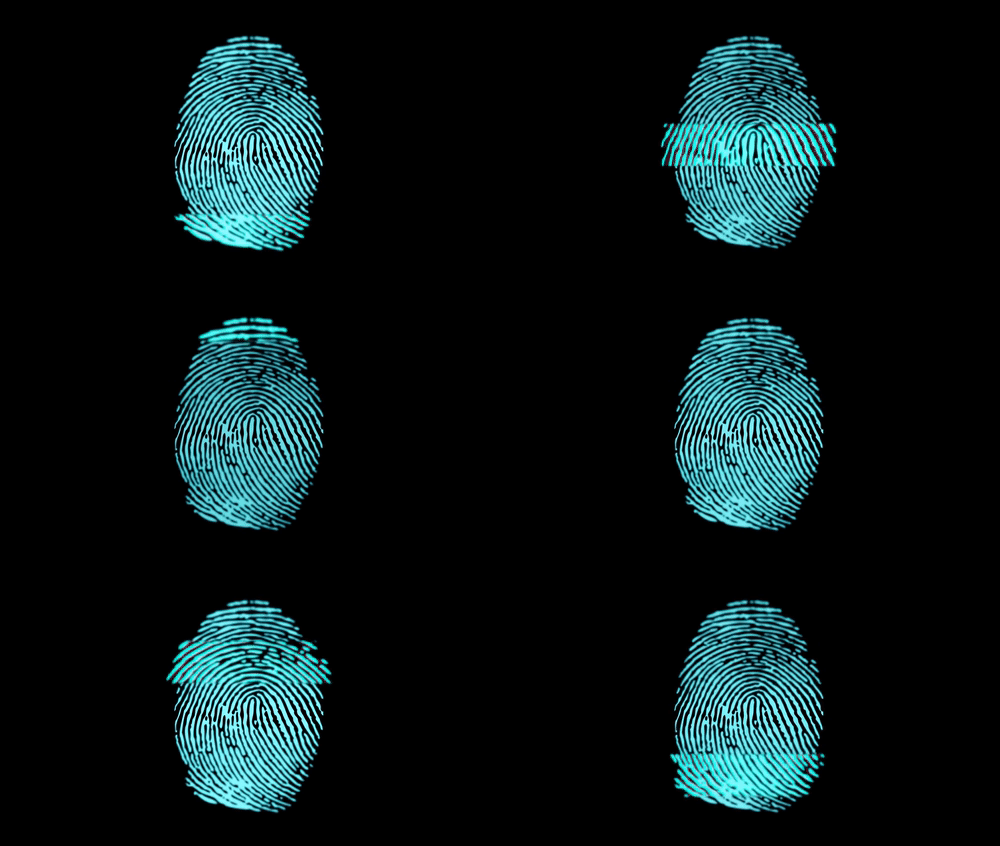
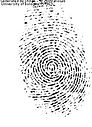
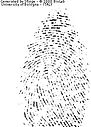
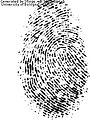
At the core of the authentication process sits a technique combining data bending and pixel sorting, methods for deliberately manipulating image data to generate unpredictable, unique visual patterns. Once a user's fingerprint is configured, each scan is run through this process, and the resulting pattern is used to generate a unique cryptographic seed from the scanned data. That seed is then recognized by the connected wallet application, converted into a non-fungible token [NFT], and stored in an encrypted digital wallet. From there, a smart contract governs the unlock command, verifying the token before granting access.
Looking back at ex0d, bi0d feels like the answer to a question that project first raised, how to secure personal belongings and retain real ownership over them through identity management tools built on strong encryption rather than a simple lock. The atai 1.0d prototype is one example of what that looks like in practice, but it represents just one direction within a much wider space of blockchain-based, cyber-physical approaches to security still worth exploring.


// evaluation


Most of lock and key systems we know are designed for user access and protection. A physical key for example serves as a “security token” for access to a locked area. A combination lock allows the user to lock personal belongings from thieves.
Similarly, the digital world has provided us with a modified version of these techniques such as four digit pins and biometric authentication techniques we now use on a daily basis.
Record indicates that ancient Egyptians used a wooden mechanism we now know as a “pin tumbler” for access and security. So over 6000 years ago, human beings, just like you and I, had the need for lock and key mechanisms.
The modern lock and key, the one we still use today to unlock our homes, was developed 3 centuries ago during the Industrial Revolution. The digital revolution of the 20th
century introduced us to
more modern and
conventionalised techniques.
These prior arts face many challenges. If it is a physical object, it is at risk of being stolen or duplicated
If it is a digital system it is likely susceptible to hacking, data manipulation, and/or information leakage, amongst other dangers
and threats.
The digital world that we are familiar with is broken into two heavily centralized segments we know as the Internet Server Provider and the Domain Name Server. The ISP knows all requests, it collects tonnes of data from its users and sells or shares it with marketers who abuse user privacy. The current solution for this is using a VPN connection. This disguises the user from the ISP. However, the VPN, like our buddies ISP and DNS, is a centralised network. So everything the ISP doesn’t know the VPN does. Kind of an oxymoron if you ask me.
Current IoT devices are sensor based. These sensors collect data on a centralised network. This means the data you provide is being sold to some other entity who is making money off of the data that you own. But, of course, our convenience masks the background and therefore we do not think to challenge
these systems.
My research has revealed to me significant insights in the field of cybersecurity and cyber-physical systems respectively. When meeting with professionals in the field, I quickly understood how vulnerable we actually are. Our current perception
on privacy and security
leaves us susceptible to an array of threats from weak passcodes to AI based attacks - some of todays largest threats in critical
infrastructure systems.
At the rate in which we are going, it is safe to assume that web03 will take over. Offering decentralised network solutions that are proven effectively in “blockchain-based authentication systems”. These systems, however preliminary, do exist, along with several other relatively new technologies. My IDE intervention and impact would be connecting these dots.
To do so, let us have a look at the proposed diagram for the atai 1.0d prototype I have been developing. The current route reads the biometric data on a centralised database to unlock a device. We have determined however that this method leaves us exposed. My intervention is at the very beginning, where the most value is located.
The IoT industry is just one of many fields that this technology can be applied in. But, there are many industries that would benefit from this adoption, and considering our pace of adoption, some will need to pioneer the way for others. At this point, it is inevitable.
The white area here represents the data neutral zone where large amounts of data are stored on a network. It is also the most susceptible area of cyber attack. The red zone represents the corrupted data sold off for market analysis. The green area represents the cryptographic protocols that will take over the entire sphere once these methods are massly applied.
The biggest challenge is pioneering the way in decentralised authentication. Most people are comfortable. Changing the masses perception on lock and key mechanisms will require a lot of effort. The key, is in my hands now.
lets conclude by zooming out from the micro level to the macro. bi0d aims to increase and provide new meaning in privacy through trustworthy cryptographic systems to deliver social equity through decentralized transparency and management of data.
Stepping back, the case for this work goes deeper than any single prototype. Lock-and-key thinking is ancient, tumbler mechanisms date back thousands of years, and the version we still use today is itself a few centuries old, barely modernized despite everything else around it changing. Every iteration since, physical or digital, has carried the same underlying weakness, a single point that can be stolen, duplicated, hacked, or leaked. The infrastructure most people trust daily, from service providers to the tools meant to protect against them, is still fundamentally centralized, meaning someone else always holds the data, and often profits from it, while convenience keeps most of us from questioning that arrangement. Conversations with people working directly in cybersecurity made that vulnerability feel less theoretical and more immediate, weak authentication and emerging AI-driven attacks are already among the most serious threats facing critical infrastructure today.
That's the gap bi0d is aimed at. Decentralized, blockchain-based authentication offers a genuinely different model, still early, but proven enough to build on. My contribution sits at the point in the system where the most value, and the most risk, concentrates, the moment biometric data is captured and stored. Rather than relying on a centralized database at that point of maximum exposure, the atai 1.0d model reroutes it through a cryptographic layer designed to make that same data far harder to intercept, sell, or misuse.
Zoomed out, the ambition behind bi0d isn't really about a briefcase. It's about redefining privacy through cryptographic systems people can actually trust, and using decentralization as a tool for something closer to social equity in how data gets managed and who benefits from it. With continued development, that same underlying model could extend well beyond this prototype, into areas like security infrastructure, transportation, and secure transactions more broadly.