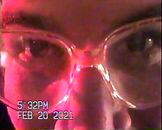
frquency0d
// key words
false reality
surveillance
awareness
analog tech
identification
covid19
israeli society
3d printing
glitches
time
perception
// premise
By the time TSS had introduced this unnamed character — later 0d — to an audience, and with what the world was living through in 2020, I felt it was vital to open a line of communication: a way to voice the thoughts, theories, and ideologies I was working through as an artist during the pandemic.
Instagram became the canvas. I used it as a space for critical thinking, articulating concern through stories — often an internal dialogue with myself made public. It gained traction faster than I expected, and before long I found myself inside a unique, multi-communal underground scene operating through Jerusalem's COVID lockdowns.
I remember surfacing from one of those underground events to tell my module instructor that my plans for a short series had changed — I'd been documenting the strange, singular moments happening around me instead, shot on vintage technology during what felt like apocalyptic times. Her response became one of the greatest lessons I've carried, not just artistically but in general: "zoom in, zoom out." I'd gone deep underground — nearly undercover — and that was my zoom in. She was pushing me to zoom out: to resurface, and translate what I'd found into something communicable.
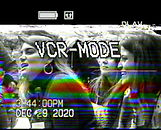
At the same time, Israel was living through the pandemic's aftershocks above ground — waves of public demonstration held several times a week. The footage from those events sat in direct contrast to what I was capturing underground, and I set out to hold both, unbiased: the analog against the social, and both of those against my own internal record. I started archiving the visual material from my Instagram stories, and in doing so, the documentation became double-sided — the external events I was filming, mirrored by the internal ones I was living through while filming them.
// research

// [r]evolution
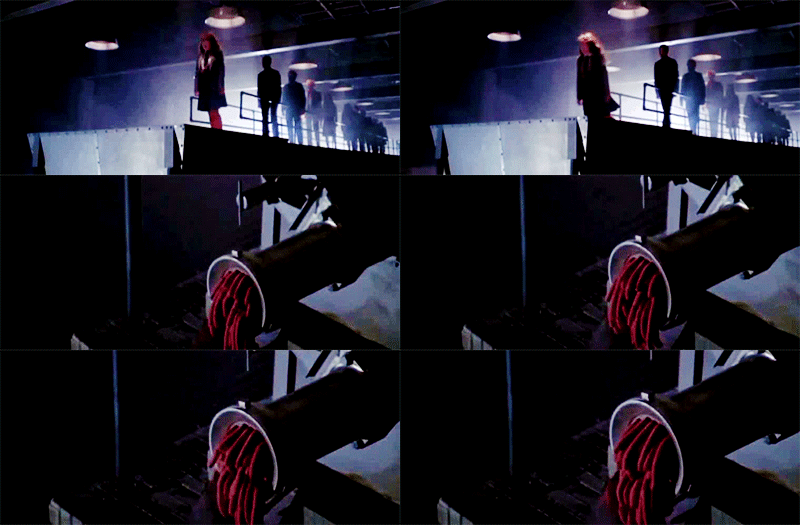
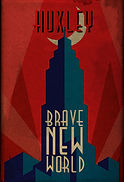
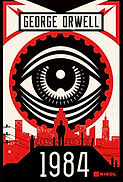
Something felt like it was unraveling in real time. COVID-19 had settled into daily life, and society's response to it was testing the edges of democratic structure — surfacing questions of hierarchy and anarchy, authority and population control. I drew early inspiration from Aldous Huxley and George Orwell, with Pink Floyd's "Another Brick in the Wall" offering a strong visual reference point. Broadly, I was interested in social behavior and governance — how people organize, and what breaks that organization open.
// [false]reality
That interest led into philosophical research grounded in Marxist theory and the writings of Franz Kafka. If Marxist theory holds that it takes something seismic to move the wheels of civilization forward, then I came to see COVID-19 as the torque behind my own internal transition — as a person on this globe, and within the cosmos more broadly.


But I am just a small part of something bigger.
For the first time, I could see three distinct layers of my own existence: myself at the micro level, Israeli society and my place within it at the meso level, and the globe — and whatever impact I might have on it — at the macro level.

// zoom out
For the zoom-out phase, I turned to Nam June Paik as a visual reference, and to Grant Kester's The Sound of Breaking Glass, Part I: Spontaneity and Consciousness in Revolutionary Theory, particularly its argument that during periods of political repression, the relationship between aesthetics and politics — and between private and public expression — undergoes both erosion and reconsolidation.
//process






// vhs[c]
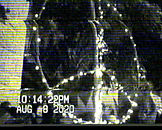
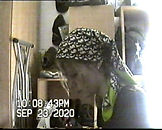
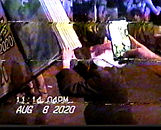
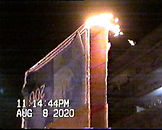
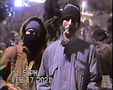
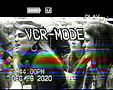
Discovery. I first came across a vintage VHS-c palmcorder with a 700x zoom lens at a secondhand shop in Jerusalem. To my surprise, it was fully functional after a few repairs. I quickly learned its language, and together we spoke the unspoken words visible only to the eye. Its zoom gave me the advantage of distance, allowing me to move incognito and collect large amounts of footage while analyzing society through indirect criticism.


// [a]glitch
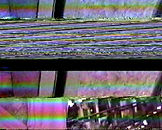
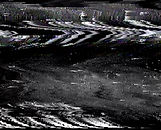
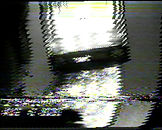
Glitch archive. I converted the analog material into digital files and placed the content on the editing table to begin dissecting it. I started to notice a series of unique frames, what I came to call glitches, and extracted, collected, and archived hundreds of them. What is a glitch, and how does a camera interpret, or capture, time, then print it back to us in visual form. These frames demanded further investigation.
// ig
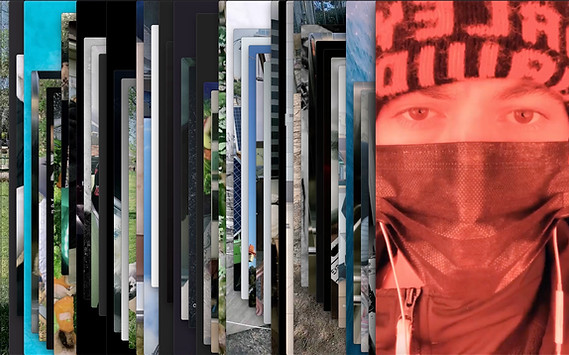
Personal documentation. A second layer of the work developed in parallel, through personal documentation on social media. Alongside the growth I was observing in society, I was growing too, becoming aware of the challenges ahead for humanity if things continued unfolding as they had been. This turned my focus toward changing myself rather than trying to change the world. That shift, once it took hold, reflected outward and began to move the people closest to me. It became my method, focus the change on myself, and let it speak through how I moved through the world.


// [d]glitch
Ironically, exporting that material later revealed the same phenomenon happening digitally as had happened on tape, and I extracted and archived those frames too. No edits were made to either archive.
// 3d
Dimensional translation. Personal interest led me toward a 3D extrusion process for selected glitches, both analog and digital. I wanted to give depth to flat, two-dimensional images, to see whether they held something more in three dimensions. Something felt missing. That instinct was later affirmed by a suggestion, early in the project, that the work deserved to be monumentalized. I moved the glitches into 3D software and began testing and analyzing this strange object of time.
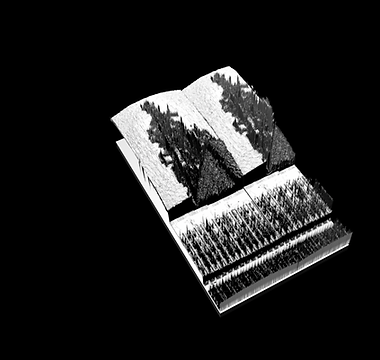


At this stage I needed to feel what the camera was telling me through its glitches, not simply see or hear it, and I found that in translating the frames into depth, into the unseen shape I'd been researching all along.




// branding
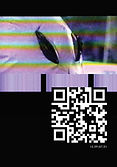
Around this time, my social circles, online and in person, began identifying me by an alias I'd adopted while trying to stay anonymous. Because there was consistent, active engagement between myself and the people following the work, it felt necessary to give that exchange a name of its own, a dedicated frequency for it to live on, with a simple site and QR code to anchor it.



// id0d
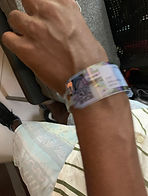
Wearable identity. A set of personalized bracelets was designed using original imagery from the glitch archive, each cut and assembled by hand. Every bracelet carried exhibition details, a directive QR code branded with the project's visual identity, and a small window for the wearer's own identifying details. These functioned as personal, numbered invitations, each tied to an individual name, handle, and a small personalized QR code linking back to that person's profile. The idea was simple, if you saw someone wearing their band, you exchanged scans and expanded the circle.


// staging
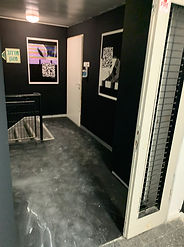
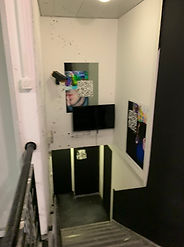
Preparation for the exhibition meant a shift from software to hardware, translating months of findings into physical form. I took over multiple rooms of underground exhibition space and filled them with a working ecosystem of vintage screens, tape decks, early desktop computers, projectors, printers, a 3D printer, and repurposed surveillance cameras. I was tested by the limits of aging technology and by my own physical capacity to organize a build of that scale alone, and working with that much equipment in that much space sharpened my organizational instincts considerably.
// outcome
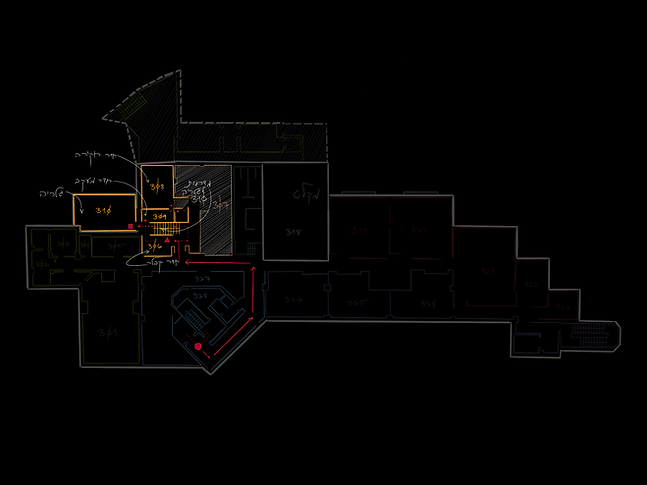
// setting: The exhibition was staged on the lowest level of the building, wrapped in concrete with no cellular signal and no local internet. In place of that, an open, password-free network was set up and offered to spectators as part of the experience.
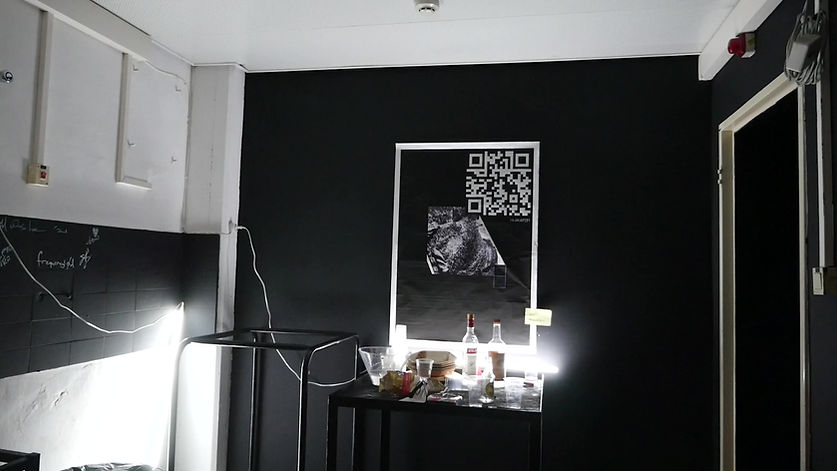
// spatial layout: A run of five adjoining galleries was given over to the show, each functioning as a distinct chapter. The first was a greeting space, snacks and drinks offered as spectators arrived, setting the tone before the experience proper began. This led into a surveillance room, which overlooked the main gallery below, a lower bunker area with high ceilings that anchored the whole show. The surveillance room also held a thin strip of one-way mirrored glass, positioned to observe a performance, sometimes improvised, that I conducted in an adjacent interrogation-style room.
// surveillance and performance: That performance was recorded and projected live into the main gallery through a closed-loop CCTV setup. Three additional closed loops ran on vintage televisions paired with surveillance cameras, layering the live performance against its own recorded, glitched echo.
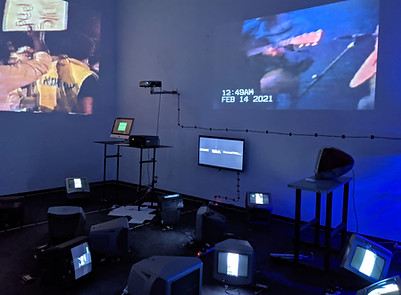
// archival media: Roughly a dozen vintage televisions played the archive of social media stories I had collected. Watching that material live on old hardware was its own discovery, a lot of it had been corrupted in the conversion process, sound breaking up, frame sizes shifting, glitches appearing unprompted, and I leaned into that instead of correcting it. It became part of the piece rather than a flaw in it.
// analog projection: The VHS material was projected across two separate walls, and the effect landed the way I'd hoped. One television, mounted vertically, played a loop of the glitches and visual dialects pulled from the story archive. Nearby, a vintage desktop computer looped the 3D rendering process, hybridizing the older and newer technologies in a way that made the whole space feel like it existed across two eras at once.
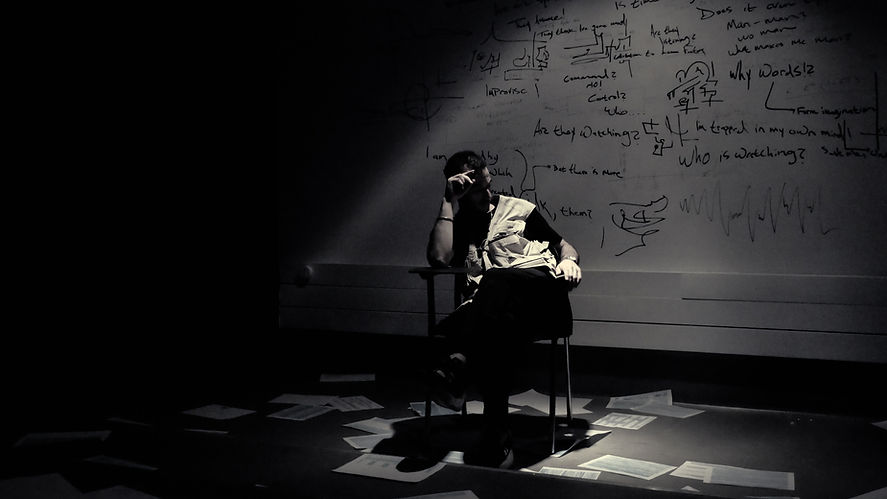
// ephemera: Two printers ran continuously through the exhibition, producing hundreds of printed glitches over its run. Left unattended, the pages accumulated and scattered across the gallery floor, becoming, by the end, part of the installation itself.
sound


// interaction
The experience began with scanning the frequency0d QR code, sourced from a poster, postcard, or bracelet. Spectators were invited to provide a small amount of data in exchange for an "unlock" feature within the piece, framed as a gesture rather than a fully built mechanism. The landing page presented a map of the exhibition alongside a brief description of each layer, orienting the audience before they moved through the space.
The personalized QR codes tied to the wearable bands would periodically surface on the vintage televisions, interspersed with the story archive, folding the audience directly into the work while raising quiet questions about data and privacy. The closed-loop surveillance, the id bands, the data collection, the projected footage, the visual dialect, all of it reinforced a single thread running through the piece. That thread would later be distilled into a phrase of its own: zoom in, zoom out.


// monument
The final piece of the project was a set of three scale, 3D-printed glitches. Analyzing them in software was one experience, holding them was another entirely. The prints resembled fossils, delicate, some carrying an extruded timestamp, and there's still something that stays with me about the idea, an image filmed by eye and hand, captured to tape, converted digitally, and finally pulled into a physical object you could hold. It really did function as a kind of fossil.


Altogether, the project succeeded in establishing a line of communication of its own. But the thing that outlasted the exhibition itself was simpler than any of the technical layers, it was the adoption of the alias as an identity in its own right.
// evaluation

// forward trajectory
Given more time and resources, I'd like to push the id0d concept further, potentially weaving it into later work exploring wearable identity systems. The underlying question stayed with me well past the exhibition, can digital identity and physical identity be meaningfully merged, and what happens when they are.


sound
// broader stakes
Our sense of identity already extends far past the traditional. What will that look like in a century? What access or convenience might it unlock? Will it become how we primarily communicate, and what will it reveal about us in the process? Choosing to interrogate society through artistic critique before turning toward more technical or scientific pursuits was, in hindsight, one of the better decisions I've made. Studying screen-based art gave me a lens for analyzing the world, society, and myself with real rigor, and that lens is what eventually pointed me toward the graduate work I'm pursuing now, focused on innovation and design engineering.
// turning point
Near the end of this chapter, someone told me to stop talking about a revolution and start building one. That stuck. Since then, the work has been less about proclaiming change and more about quietly becoming the kind of person who makes it. This project marked that shift, the beginning of a new era, and the point where the alias stopped being a persona and started being a practice. It was time to take the vision further.